
Logo Cepheid
Maggiori informazioni
Località/Lingua

{{headingText}}

{{paragraphText}}

{{continueBtnLabel}}

{{initials}}

Main Menu
Località/Lingua

{{headingText}}

{{paragraphText}}

{{continueBtnLabel}}

Maggiori informazioni

Maggiori informazioni

Xpert® Xpress GBS

GBS computer generated depiction.

Doppio target per i sierotipi I-X di S. agalactiae (DNA) e non beta-emolitici in 30–42 minuti.

L’esigenza

an ill woman listens to a physician
Lo streptococco di gruppo B (GBS) costituisce una delle principali cause di sepsi neonatale con insorgenza precoce. Rates of maternal colonization have not changed, but universal antenatal screening at 35–37 weeks along with the use of intrapartum antibiotic prophylaxis (IAP) has resulted in a decrease of early-onset disease.1
Challenges remain, including:
  • Rischio di variazione dello stato di colonizzazione GBS in seguito allo screening a 35–37 settimane di gravidanza2.3
  • Some women with unknown GBS status presenting at Labor and Delivery unit4.5
  • PAI basata sul rischio che espone agli antibiotici il 65–85% delle donne GBS-negative6

1 Wicker E, et al. Group B streptococci: declining incidence in infants in Germany. Pediatr Infect Dis J. 2019 May;38(5):516–9.
2 Helmig R, et al. Diagnostic accuracy of polymerase chain reaction for intrapartum detection of Group B Streptococcus colonization. Acta Obstet Gynecol Scand. 2017
Sep;96(9):1070-1074.
3 Melin P. Neonatal group B streptococcal disease: from pathogenesis to preventive strategies. Clin Microbiol Infect. 2011 Sep;17(9):1294-303.
4 Di Renzo et al. Screening GBS intrapartum e profilassi antibiotica: una conferenza di consenso europea. J Matern Fetal Neonatal Med. 2014:1-17. Disponibile in: https://pubmed.
ncbi.nlm.nih.gov/25162923
5 ASM, March 2020, Guidelines for the Detection and Identification of Group B Streptococcus - Revised Guidelines from CDC, 2020
6 Saari A, et al. Antibiotic exposure in infancy and risk of being overweight in the first 24 months of life. Pediatrics. 2015 Apr;135(4):617–626.

La soluzione

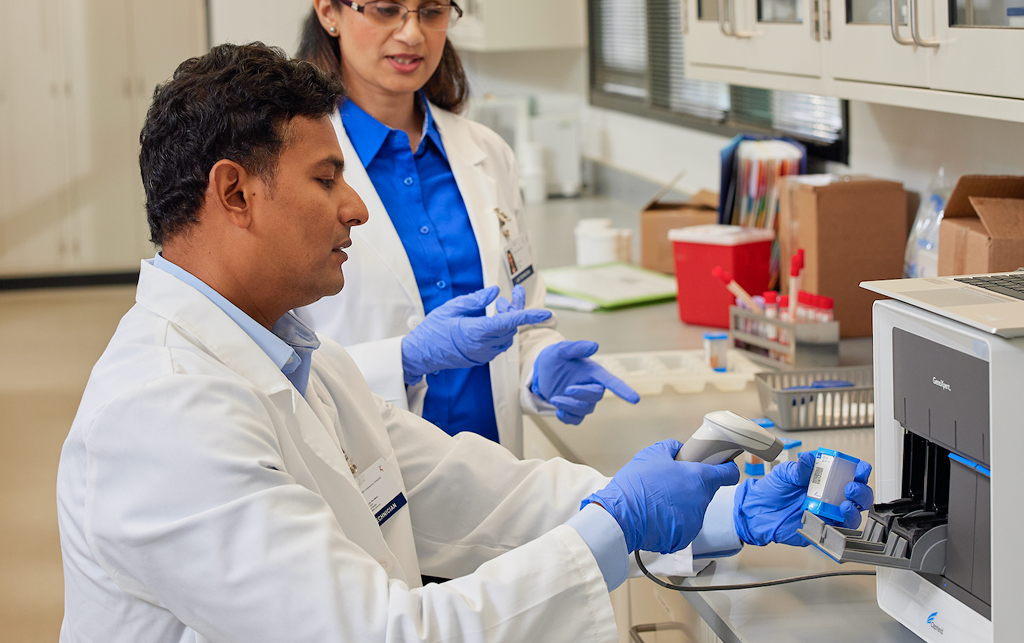
a male and a female researchers scanning cepheid test cartridges
  • The Xpert Xpress GBS test is a qualitative in vitrodiagnostic test intended for the detection of DNA from Group B Streptococcus (GBS). The test is performed usinga dual vaginal/rectal swab specimen collected from pregnant females during antepartum or intrapartum.
  • The Xpert Xpress GBS test is intended to aid in the diagnosis of GBS colonization to identify candidates for antibiotic prophylaxis.

L’impatto

a smiling female doctor attends an elderly woman
  • Identify GBS colonization status at the right time, at the time of labor (intrapartum).4
  • Identifying more women with GBS at the time of delivery and providing them with timely Intrapartum AntibioticProphylaxis (IAP) may result in a reduction of early-onset GBS disease in neonates.7
  • Fast and easy-to-interpret results enable adequate IAP delivered to mothers with unknown status, which may resultin less impact on the newborn intestinal flora.8.9
4 Di Renzo et al. Screening GBS intrapartum e profilassi antibiotica: una conferenza di consenso europea. J Matern Fetal Neonatal Med. 2014:1-17. Disponibile in: https://pubmed.
ncbi.nlm.nih.gov/25162923
7 El Helali et al. Diagnostic Accuracy of a Rapid Real-Time Polymerase Chain Reaction Assay for Universal Intrapartum Group B Streptococcus Screening. Clin Infect Dis. (2009) 49 (3):
417-423.
8 Björklund V, et al. Replacing risk-based early-onset-disease prevention with intrapartum group B streptococcus PCR testing. J Matern Fetal Neonatal Med. 2017 Feb;30(3):368-373
9 Zimmermann P, et al. Effect of intrapartum antibiotics on the intestinal microbiota of infants: a systematic review. Arch Dis Child Fetal Neonatal Ed. 2020 Mar;105(2):201–8

CE 2797

Per risultati migliori

Maggiori informazioni
Powered by Translations.com GlobalLink Web SoftwarePowered by GlobalLink Web