
-
Solutions
Back
Cepheid’s Solutions
-
Global Access
-
Antibiotic Stewardship
-
Customized Menu and Scalability
-
Testing Everywhere
Back
Testing Everywhere
-
Knowing MORE Matters
-
-
Insights
Back
Cepheid’s Insights
-
Webinars
-
Cepheid RADAR
Back
Cepheid RADAR
-
Support
Back
Support Center
-
Documents & Technical Resources
-
Troubleshooting and How-tos
-
MyCepheid and Order Support
-
Reimbursement Guidelines
-
Contact Us
Back
Contact Us
-
-
About Us
Back
About Cepheid
-
Mission and History
Back
Mission and History
-
Our Leadership
Back
Our Leadership
-
Events
Back
Events
-
Sustainability
-
Distributors
Back
Distributors
-
Business Development Opportunities
-
Innovate with Cepheid
-
Meet the Cepheid Bike
-
News
Back
News
-





The World is Running Out of Effective Antibiotics
In the global race against antimicrobial resistance (AMR) and related
healthcare-associated infections (HAIs), we provide diagnostic solutions
that quickly and accurately identify pathogens to enable the right
isolation and treatment before it's too late.
Join us in the race - MORE results, LESS spread.



True Scale of the AMR Threat
By the year 2050, it is estimated that 10 million people will die annually because of drug-resistant infections.1 Following recently published data in the landmark Lancet GRAM report, we know we are now far closer to this figure than ever realized.2

What is "The Antibiotic Apocalypse"?

What is "The Antibiotic Apocalypse"?
COVID-19: AMR Legacy
The COVID-19 pandemic has elevated concerns over AMR and antibiotic-associated adverse events, with surges in antibiotic prescribing, hospitalizations, and drug-resistant bacterial transmissions.6,7

COVID-19 hospital-admitted patients with a secondary bacterial infection.6

COVID-19 hospital-admitted patients who received antibiotics.6

COVID-19 ICU-admitted patients who received antibiotics.8
Future Preparedness

Throughout the COVID-19 pandemic, PCR testing emerged as the superior assay format in terms of accuracy and sensitivity, forming the backbone of nationwide screening regimens.9

Most hospital laboratories now have the capability, awareness, and even the infrastructure to carry out molecular testing, so that shifting from culture to molecular-based workflows to accelerate turnaround times is more feasible than ever before.




Outbreak Risks
Superbug outbreaks and AMR pose one of the greatest challenges to the healthcare systems, and national elective recovery plans. With the right test, quickly and accurately identify pathogens in under one hour* to enable the right isolation and treatment, keeping wards open, reducing hospital costs, and stopping the spread of resistance.
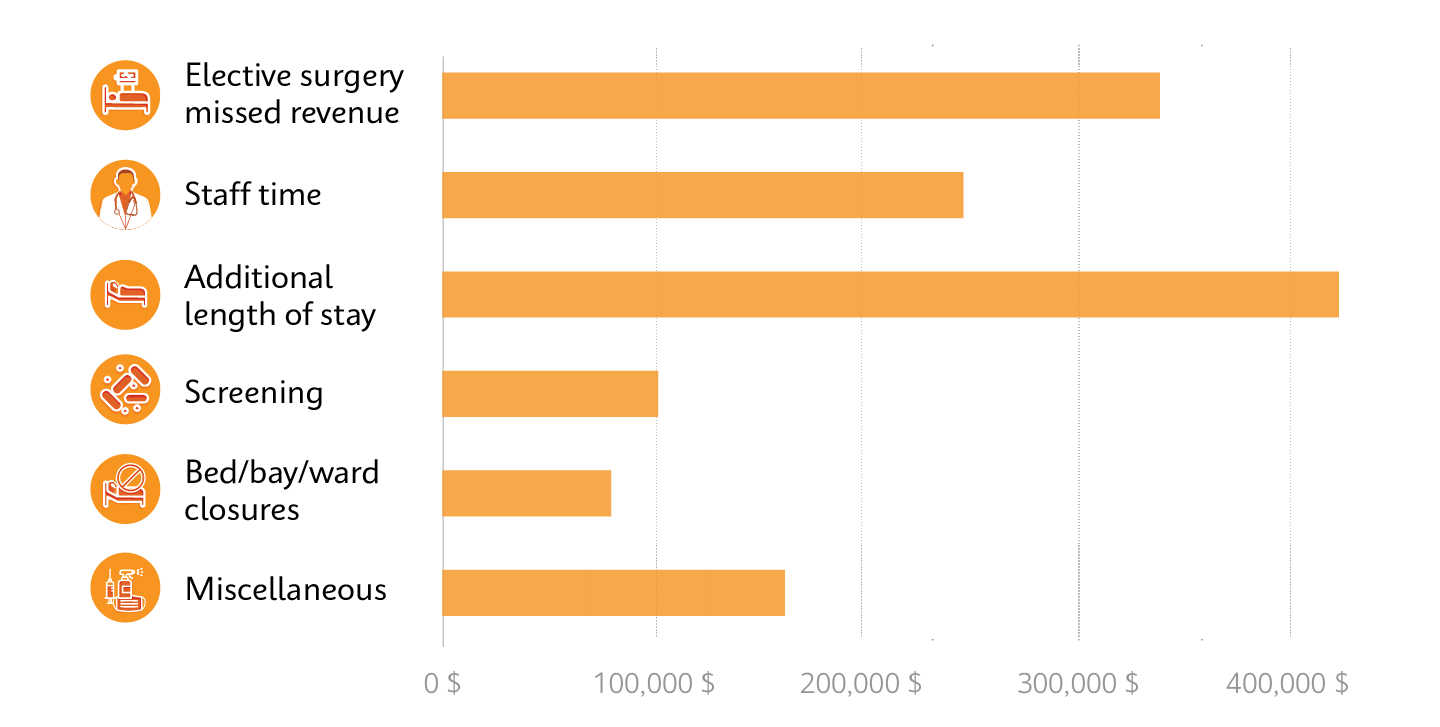
Cost breakdown from a single outbreak of a rapidly spreading superbug, carbapenemase-producing Enterobacterales (CPE), which exceeded $1,000,000 over 10 months.10
Fight AMR & Superbugs with Fast & Accurate PCR in ~1 Hour*
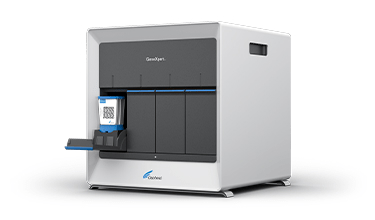
On-demand identification with the GeneXpert® system's fast PCR Xpert® tests help healthcare professionals reduce onward transmission of resistant bacteria throughout the patient pathway and optimize appropriate therapy management, helping prevent the spread of pathogens and resistance.




Testing in 3 Easy Steps: Sample-In, Answer-Out Technology
1
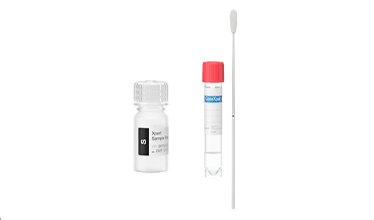
Insert swab into sample reagent vial and break
2
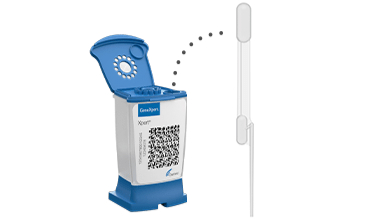
Transfer sample to cartridge
3
Insert cartridge and start test
Refer to the Cepheid test’s package insert for full details of supported sample types and specimen collection methods
Product Resources
Dr. Fred Tenover: Carbapenemases & Xpert® Carba-R

Dr. Fred Tenover: Carbapenemases & Xpert® Carba-R
Related Webinars
From Detection to Decision: Stewarding Multiplex GI Panel and Targeted Testing Results in Clinical Practice
This webinar will provide a stewardship‑focused framework for optimizing GI infection testing in the clinical laboratory. Dr. Moore, Associate Professor in the Department of Medical Laboratory Science at Rush University, will review best practices for selecting between multiplex GI panels and targeted stand‑alone tests such as C. difficile and norovirus.
Reimbursement for GI Panels: Navigating Coding, Payer Coverage, and Payment
Join us for a focused webinar on gastrointestinal (GI) panel reimbursement, led by Jack Sawyer, Senior Director of Value & Access at Cepheid, alongside Dr. Thomas Goss, Managing Partner and Co‑Founder of BeaconOne Healthcare Partners®. Together, they will review coverage landscapes for GI panel testing and discuss important considerations for reimbursement across various sites of service.
Optimizing Use of GI Panels - Practical Stewardship Strategies
This webinar provides a practical framework to help laboratories determine when multiplex GI panels are appropriate versus when stand-alone tests offer greater clinical value. It compares methods for GI pathogen detection to highlight differences in turnaround time, labor needs, and diagnostic relevance.
Norovirus: Biological Insights, Clinical Strategies, and Sustained Readiness
Norovirus is a viral illness that is the most common cause of acute gastroenteritis globally (AGE), causing an estimated 685 million cases of AGE annually, including 200 million cases in children under 5 years (WHO – Norovirus, Nov. 2025). Our expert panel will explore the biology behind transmission and severity, discuss emerging strains, and share evidence-based clinical strategies for diagnosis, management, and outbreak control. This session empowers clinicians to proactively manage norovirus challenges, ensuring effective patient care and operational resilience.
Diagnosis of Clostridiodes difficile Infection
Clostridiodes difficile infection (CDI) remains a significant public health concern in the United States, with an estimated 450,000 cases and 35,000 deaths annually. There are gaps in laboratory diagnosis and management, including the need for improved test specificity for symptomatic diseases over asymptomatic colonization and the use of multistep testing to enhance specificity.
Related Publications
Impact of different carbapenemase-producing Enterobacterales screening strategies in a hospital...
Despite higher initial laboratory PCR costs, savings were made elsewhere through rapidly expediting test results, as well as improving the patient’s experience. A reduction in bed-days lost due to CPE was observed when on-demand molecular screening was introduced.
An outbreak of two strains of OXA-48 producing Klebsiella pneumoniae in a teaching hospital
Reliance on culture and clinical specimens, in particular for OXA-48’s, can be insensitive and lead to late recognition of a problem. Pre-emptive screening of high-risk patients with fast PCR provided an effective and pragmatic solution
Active Surveillance of Carbapenemase-Producing Organisms (CPO) Colonization...
The introduction of on-demand, accurate and easy-to-use PCR testing resulted in a significant decreasing trend in both colonisation and infection rates (p<0.05)
Reducing rates of Clostridium difficile infection by switching to a stand-alone NAAT with clear sampling criteria
Rapid and sensitive commercial PCR as a stand-alone assay together with clear sampling guidance offers an optimal approach to patient management and best use of limited isolation facilities.
Detection of Methicillin-Resistant Staphylococcus aureus Infections Using Molecular Methods
While culture methods remain important due to the need for extended antimicrobial susceptibility testing, PCR-based methods offer more rapid results, which reduces the time to optimal antimicrobial therapy
Performance of the Xpert® Carba-R v2 in the daily workflow of a hygiene unit in a country with a low prevalence of carbapenemase-producing Enterobacteriaceae
On-demand PCR demonstrated excellent performance, and reduced time to result versus culture from 24–48 hours to <1 hour, enabling rapid cohorting of carriers and de-escalation of negative patients. The PCR assay is well adapted for rapid screening of high-risk patients even in low prevalence regions
Can real-time polymerase chain reaction allow a faster recovery of hospital activity in cases of an incidental discovery of carbapenemase-producing Enterobacteriaceae and vancomycin-resistant Enterococci carriers?
The fast and actionable negative predicative value utilising fast PCR enabled early decision making and avoided the need for x3 weekly culture screening, enabling more appropriate bed management
Evaluation of Xpert Carba-R Assay for the Detection of Carbapenemase Genes in Gram-Negative Bacteria
Meta-analysis performance evaluation concluded the on-demand PCR assay is a proven and efficient methodology for the detection of he “big five” carbapenemase gene families, and could act as the new gold standard
Related Videos
AMR & Carbapenemases
Carbapenemases
Carbapenemases

AMR & Carbapenemases

Carbapenemases
Carbapenemases
PCR Tools to Fight AMR

Xpert® Carba-R

Xpert® MRSA NxG

Xpert® C. difficile/Epi

Xpert® vanA

Xpert® SA Nasal Complete
References
US-IVD In Vitro Diagnostic Medical Device. May not be available
in all countries.
For COVID-19: For use under an Emergency Use Authorization in the United States.
* Turnaround times vary by test. See individual Product Inserts for specific turnaround times.
^ For positive MRSA results with early assay termination. Otherwise, full runtime is 70 minutes.
# For positive Norovirus results with early assay termination. Otherwise, full runtime is 90 minutes.
- 1. World Healt Organization (WHO). 2019. New report calls for urgent action to avert antimicrobial resistance crisish. Accessed March 2022.https://www.who.int/news/item/29-04-2019-new-report-calls-for-urgent-action-to-avert-antimicrobial-resistance-crisis
- 2. Murray C, et al. Global burden of bacterial antimicrobial resistance in 2019: a systematic analysis. The Lancet. 2022 Feb;399(10325):629-655
- 3. CDC 2019 Antibiotic Resistance Threats Report. https://www.cdc.gov/antimicrobial-resistance/data-research/threats/index.html#:~:text=More%20than%202.8%20million%20antimicrobial,million%20infections%20and%2048%2C000%20deaths
- 4. ASM AMR Fact Sheet. https://asm.org/asm/media/policy-and-advocacy/asm-amr-factsheet-2025.pdf
- 5. MedTech Europe. 2014. Healthcare-Associated Infections Brochure. Accessed Feb 2021.https://www.medtecheurope.org/resource-library/hai-brochure/
- 6. Langford B, et al. Bacterial co-infection and secondary infection in patients with COVID-19: a living rapid review and meta-analysis. Clin Microbiol Infect. 2020 Dec;26(12):1622-1629
- 7. Belvisi V, et al. Impact of severe acute respiratory syndrome coronavirus-2 (SARS CoV-2) pandemic on carbapenemase-producing Klebsiella pneumoniae (KPC-Kp) prevention and control program: convergent or divergent action? J Hosp Infect. 2020 Dec;109:29-31
- 8. Pritchard M, et al. International Severe Acute Respiratory and Emerging Infections Consortium, COVID-19 Report: 8 June 2020. medRxiv. Accessed Feb 2021.https://www.researchgate.net/publication/343217999_ISARIC_COVID-19_Clinical_Data_Report_8_June_2020
- 9. Laboratory testing for coronavirus disease (COVID-19) in suspected human cases: interim guidance, 19 March 2020. Accessed November 2022. https://apps.who.int/iris/handle/10665/331501
- 10. Otter J, et al. Counting the cost of an outbreak of carbapenemase-producing Enterobacteriaceae: an economic evaluation from a hospital perspective. CMI. 2016 Oct;23(3):188-196.