
-
Solutions
Back
Cepheid’s Solutions
-
Global Access
-
Testing Everywhere
Back
Testing Everywhere
-
Antibiotic Stewardship
-
Customized Testing for Your Institution
-
Knowing MORE Matters
-
-
Insights
Back
Cepheid’s Insights
-
Webinars
Back
Webinars
-
Cepheid RADAR
Back
Cepheid RADAR
-
Support
Back
Support Center
-
Documents & Technical Resources
-
Troubleshooting and How-tos
-
MyCepheid and Order Support
-
Contact Us
Back
Contact Us
-
-
About Us
Back
About Cepheid
-
Mission and History
Back
Mission and History
-
Our Leadership
Back
Our Leadership
-
Events
Back
Events
-
Distributors
Back
Distributors
-
Business Development Opportunities
-
Innovate with Cepheid
-
Meet the Cepheid Bike
-
News
Back
News
-
Careers
Back
Careers
-


%20(2)%20(1).png)
Knowing More Matters
{{searchText ? ' for "' : ''}}{{searchText}}{{searchText ? '"' : ''}}What are PCR Tests?
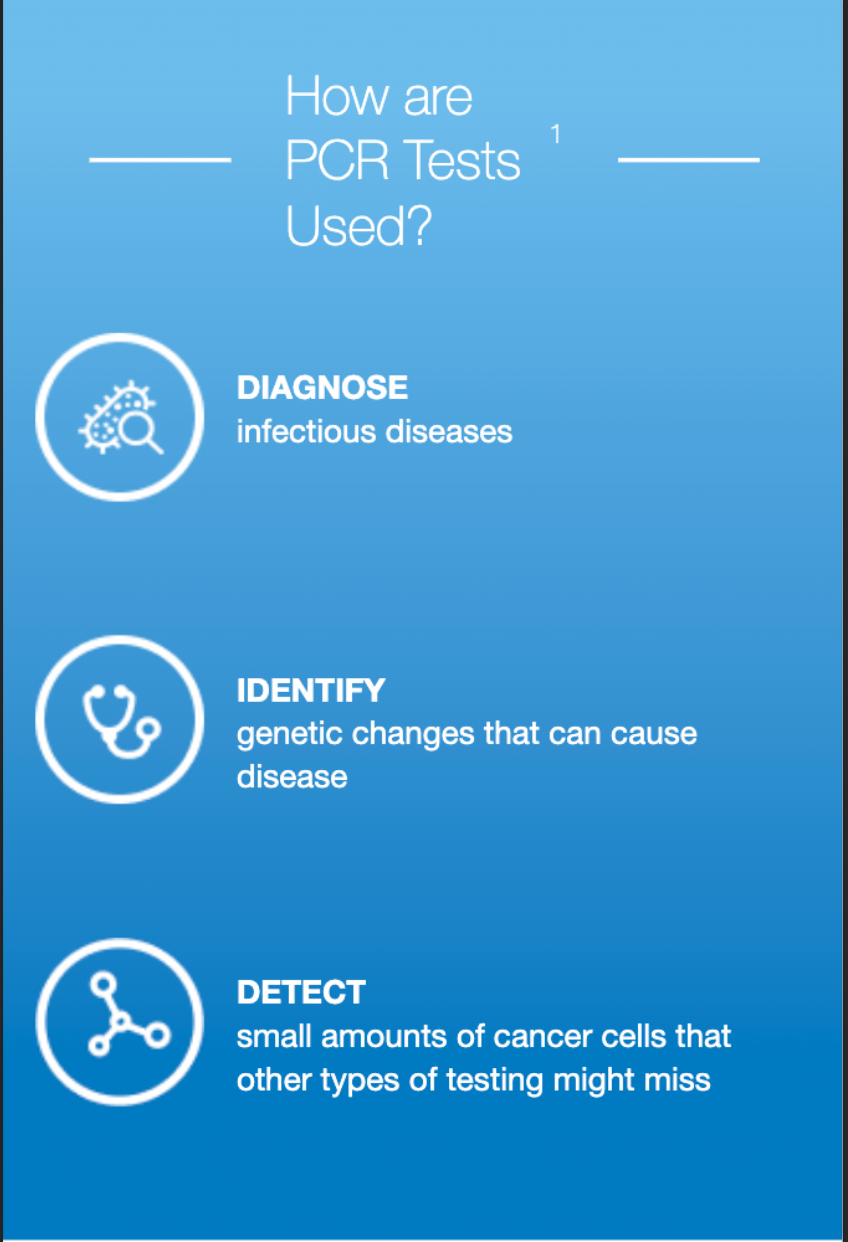
A PCR (polymerase chain reaction) test detects genetic material from an organism (i.e. bacteria or a virus) by copying a small portion of the genetic material in a process called amplification.
Amplification allows for easier detection and identification of pathogens (disease-causing organisms) — sometimes even prior to symptoms surfacing — thus helping to prevent the transmission of infection and halt further disease spread. Tests that do not use amplification, such as antigen tests, might not achieve early detection because there are not enough viruses, bacteria, or other pathogens present in a patient’s sample.

How Does PCR Testing Work?2

1. A patient gives a sample
A healthcare provider takes a sample of blood, saliva, mucus, or tissue. This sample contains DNA or RNA (genetic material).

2. The sample is placed into a machine where PCR amplification occurs
A chemical reaction causes the sample to make billions of copies of the genetic sequence.

3. The test is complete
The machine determines if pathogens are present in the amplified sample. A healthcare professional examines the results to develop a treatment plan.
What is the Difference Between PCR and Antigen Testing?
Throughout the COVID-19 pandemic, both PCR and rapid antigen testing emerged as integral to slowing the spread of the virus. However, PCR has been recognized as the gold standard for respiratory virus testing.

PCR Tests
PCR tests are more sensitive than antigen tests. PCR tests amplify genetic material from the virus; therefore, they can detect very small amounts of virus in a sample

Antigen Tests
Antigen tests detect viral proteins directly from a sample without amplification; therefore, false negatives may occur if there is a low or moderate amount of virus present
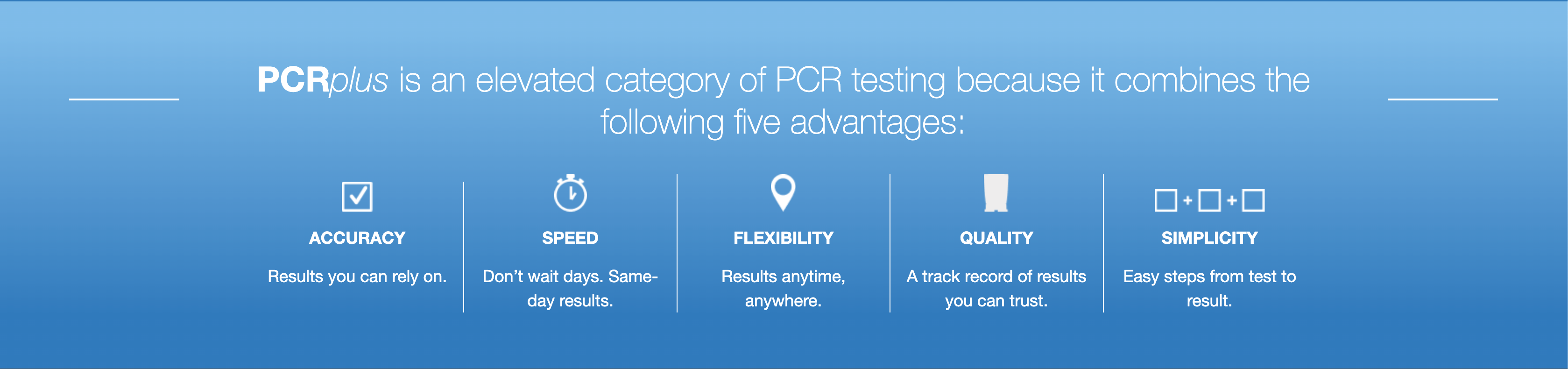
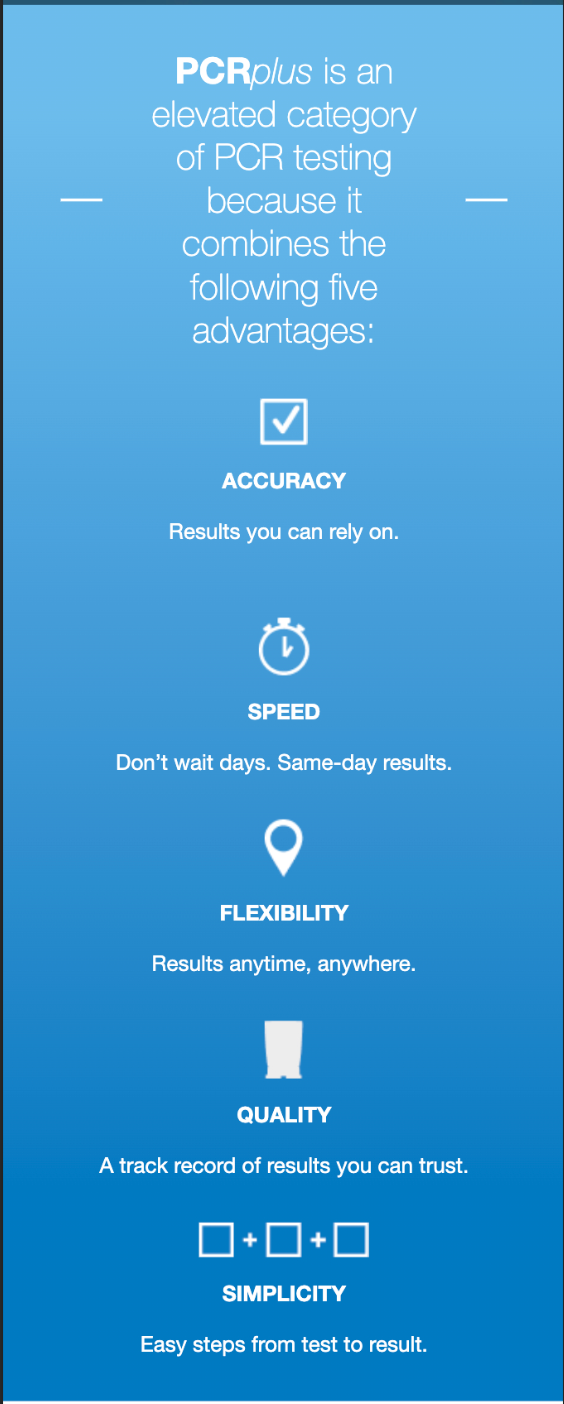
Time to result and intended use environment may vary, refer to individual test package insert for details.
1 Medline Plus: PCR Tests. Accessed 10/1/2022. https://medlineplus.gov/lab-tests/pcr-tests/
2 Cleveland Clinic: COVID-19 and PCR Testing. Accessed 10/1/2022. https://my.clevelandclinic.org/health/ diagnostics/21462-covid19-and-pcr-testing